Sustainable Sportswear Manufacturing: Eco-Conscious Brand Guide

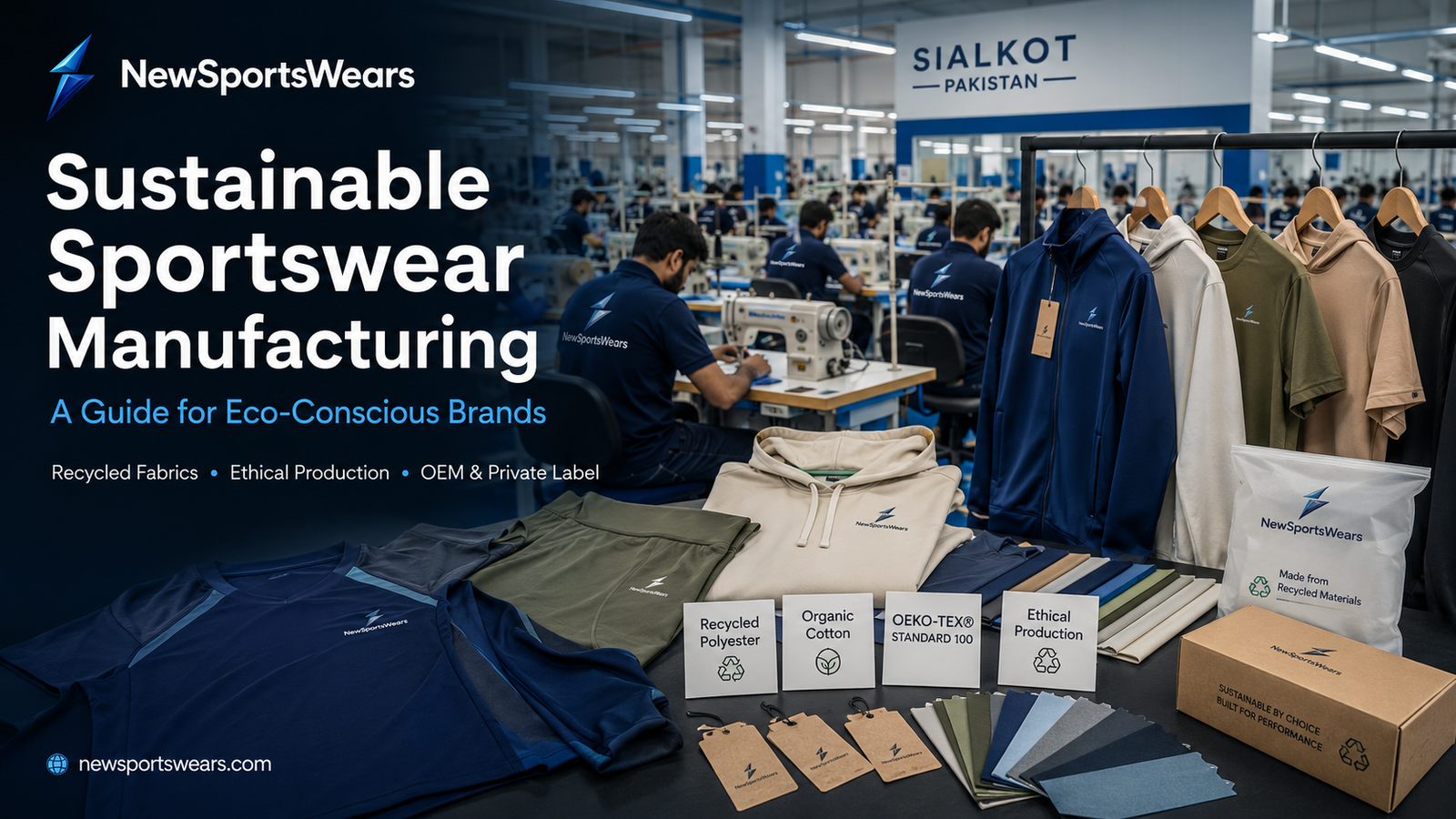
Sustainable Sportswear Manufacturing: A Guide for Eco-Conscious Brands
Sustainability has moved from a marketing add-on to a baseline expectation in modern sportswear. Customers ask about materials, factories ask about certifications, and retailers demand ethical compliance documentation. NewSportsWears supports sustainable manufacturing options across our product range — recycled fabrics, organic cotton, water-saving processes, and ethical labor standards.
What Sustainable Sportswear Actually Means
“Sustainable” gets thrown around loosely. In credible sportswear manufacturing, it covers four pillars:
- Materials: Where the fabric comes from and how it’s made
- Processes: Water, energy, and chemicals used in production
- Labor: Fair wages, safe conditions, no child labor
- End-of-life: Biodegradability, recyclability, takeback programs
Sustainable Fabric Options We Offer
1. Recycled Polyester (rPET)
Made from recycled plastic bottles. Performs identically to virgin polyester for jerseys, leggings, and compression wear, but uses ~50% less energy and reduces ocean plastic.
2. Organic Cotton (GOTS Certified)
Grown without synthetic pesticides or GMOs. Soft, hypoallergenic, and increasingly demanded by retail-conscious customers. Ideal for tees, hoodies, and athleisure.
3. BCI Cotton (Better Cotton Initiative)
Cotton grown using less water and pesticides. More affordable than fully organic, increasingly the baseline for ethical brands.
4. Recycled Cotton
Made from post-industrial or post-consumer cotton waste. Common in 50/50 blends with rPET for fully circular garments.
5. Bamboo & Tencel/Lyocell Sportswears
Cellulose-based fibers from sustainable forestry. Soft, breathable, and naturally moisture-wicking — premium feel for athleisure.
6. Hemp Blends
Naturally durable, low-water crop. Often blended with cotton for soft yet rugged garments.
Sustainable Production Processes
- Water-saving dyeing: Modern reactive dyeing reduces water use 40–60%
- Solar-powered factory equipment
- OEKO-TEX Standard 100 certification: No harmful chemicals in finished textiles
- Sublimation printing: Uses no water vs traditional dye-house printing
- Pattern optimization: Reduces fabric waste by 8–15%
- Bluesign-certified inks and chemicals
Ethical Labor Standards Sportswears
- SEDEX (SMETA) audits
- BSCI compliance
- WRAP certification
- SA8000 social accountability
- Fair wage commitments above local minimums
- No child labor — strict age verification
- Safe working conditions with health and safety policies
Sustainable Packaging
- Recycled paper hangtags and inserts
- Compostable polybags (PLA-based)
- Recycled plastic mailer bags
- FSC-certified gift boxes
- Soy-based inks for printing
- Minimum-waste folding patterns
Cost Premium for Sustainable Sportswear
- rPET vs virgin polyester: 5–15% premium
- Organic cotton vs conventional: 20–35% premium
- BCI cotton: 5–10% premium
- Bamboo/Tencel: 25–45% premium
- Compostable packaging: 10–25% premium over polybags
Most brands recover this premium and more through pricing, brand positioning, and customer loyalty.
Documentation & Marketing Claims
If you market sustainability claims, back them with documentation:
- GOTS certification for organic cotton
- GRS (Global Recycled Standard) for rPET
- OEKO-TEX certificates for chemical safety
- SEDEX/BSCI audit reports for labor
- Fabric traceability documentation
We provide all available certificates with sustainable orders.
Browse our sportswear range and ask about our sustainable fabric options for your next bulk order.
FAQs
1. What’s the most affordable sustainable fabric option?
BCI cotton (5–10% premium) and recycled polyester (5–15% premium) are the most affordable entry points into sustainable production.
2. Are sustainable fabrics as durable as conventional ones?
Yes. rPET performs identically to virgin polyester. Organic cotton matches conventional cotton. Bamboo and Tencel often outperform conventional in softness and breathability.
3. Can you certify my products for sustainability claims?
We supply certified materials and audit documentation. Some certifications (like GOTS) require chain-of-custody at every step including the brand level — we’ll guide you through what’s needed.
4. What’s the MOQ for sustainable fabrics Sportswears?
Slightly higher than conventional — typically 100–200 pieces per design — because mills require larger minimums for certified materials.
5. How can I avoid greenwashing Sportswears?
Only make claims you can back with certificates. Avoid vague terms like “eco-friendly” without context. Specify percentages (e.g., “made with 80% recycled polyester”) and reference the certifications you hold.
Contact NewSportsWears for custom bulk manufacturing, OEM, and private label orders.
Follow Links
Follow New Sports Wears on Instagram
Contact New Sports Wears on WhatsApp