How to Scale a Sportswear Brand: 100 to 10,000 Units/Month

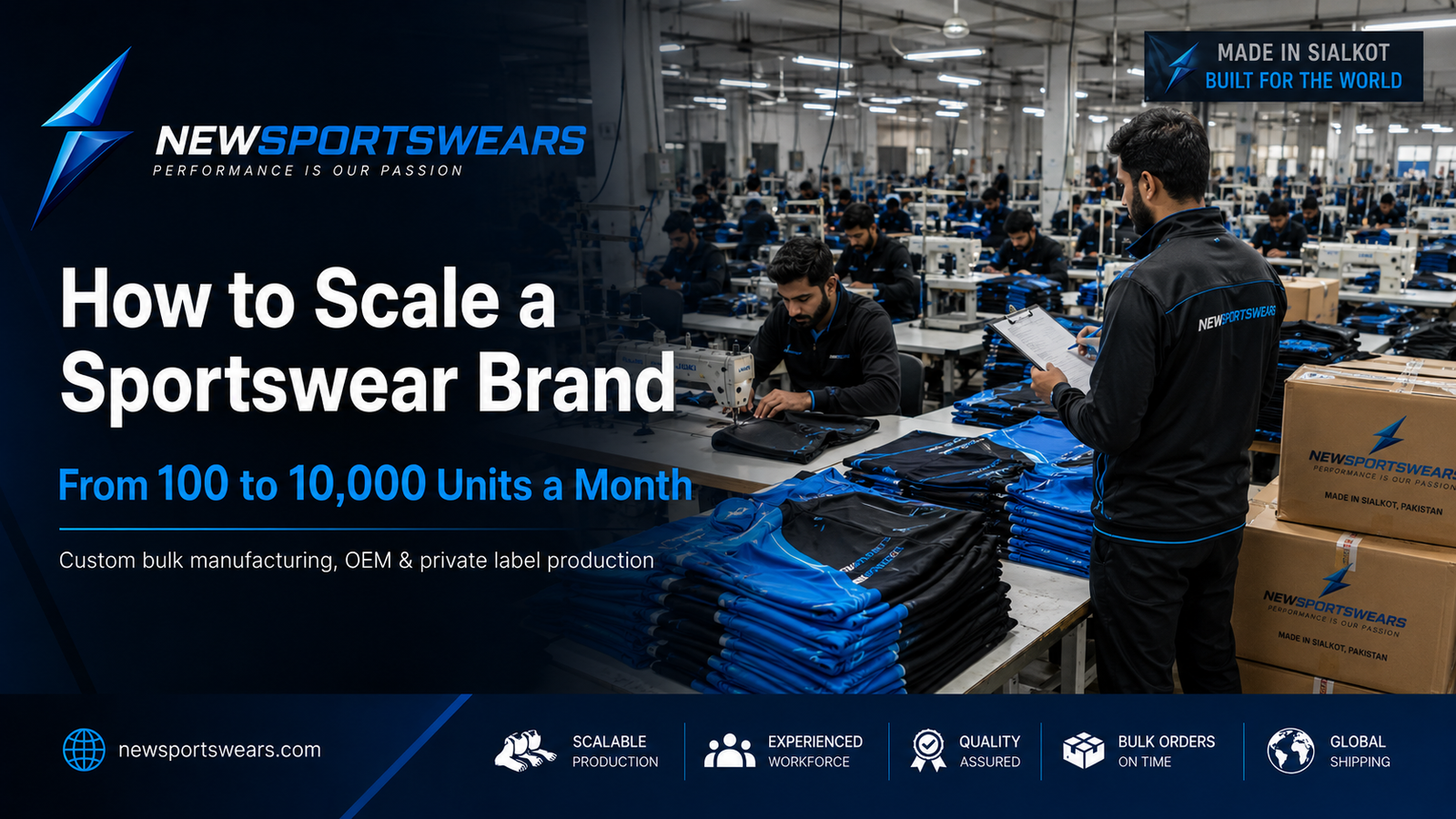
How to Scale a Sportswear Brand: From 100 to 10,000 Units a Month
Most sportswear brands hit predictable walls as they grow Sportswear . The first wall comes around 500 units a month — when DIY logistics start breaking. The next comes near 2,000 — when one manufacturer can’t keep up with both speed and quality. The hardest wall sits around 5,000–10,000 monthly units, where cash flow, fabric sourcing, and operations all need to mature at once. This guide walks through how to scale a sportswear brand from early traction to consistent five-figure monthly volume, drawing on the patterns NewSportsWears sees across hundreds of private label clients in Sialkot.
Stage 1: 0–500 Units/Month — Validate and Standardize
At this stage your priority is finding which 3–5 styles actually sell. Order small batches (50–100 pieces per style) using sublimation or simple cut-and-sew. Track sell-through rate per style weekly. Kill styles below 60% sell-through within 90 days. Keep the SKU count tight — under 15 active styles is healthy. Standardize your tech packs, size charts, and Pantone codes now so they survive the move to bigger production runs later.
Stage 2: 500–2,000 Units/Month — Build the Operating Backbone
This is where most brands stall. The fix is operational, not creative.
- Move from one-off orders to scheduled production runs (every 30–45 days).
- Switch from spreadsheet inventory to a real inventory system (Cin7, Katana, or even Shopify-native tools).
- Use a 3PL for fulfillment instead of shipping from your apartment.
- Negotiate net-30 terms with your manufacturer to free up cash.
- Lock in fabric reservations for your bestsellers so reorders don’t get delayed.
Lead times typically run 30–45 days for production at this volume, with 5–10 day air freight or 25–35 day sea freight from Sialkot.
Stage 3: 2,000–5,000 Units/Month — Diversify and Forecast
At this volume, single points of failure become business-threatening. You need:
- Forecasting: 12-week rolling production plans broken down by SKU.
- Fabric pre-buys: reserve 2–3 months of fabric for top SKUs to lock in price and lead time.
- Backup manufacturing: a second factory for surge capacity, even if your main partner stays primary.
- Quality systems: AQL 2.5 inspection on every shipment, written QC standards.
- Dedicated production manager: internal hire or your manufacturer’s account team.
Stage 4: 5,000–10,000 Units/Month — Vertical Integration Decisions
Now the big decisions hit. Do you stay asset-light with a manufacturing partner, or invest in your own production? For most brands under $20M revenue, staying with a strong OEM partner like NewSportsWears makes more sense — you get factory-grade output without capital lockup. What does need to mature: dedicated capacity allocation, EDI or API order flow, monthly QBRs with your manufacturer, multi-port shipping (UK, US, Australia, UAE in parallel), and a controller-level hire on your side to manage cash and FX.
Cash Flow: The Real Bottleneck
The biggest scaling killer isn’t demand — it’s working capital. As you grow, your cash gets locked in fabric, WIP, and finished inventory in transit. Common financing options:
- Manufacturer net terms (net-30 to net-60 once relationship is established).
- Inventory financing through specialized lenders (Wayflyer, Clearco, 8fig).
- Purchase order financing for confirmed B2B orders.
- Revenue-based financing tied to monthly sales.
Product Mix as You Scale
The brands that scale most cleanly tend to expand their range deliberately. Start with one core category (e.g., training tees), then add adjacent categories (shorts, hoodies, joggers) before moving into accessories. Many of our clients build a full range across custom sportswear and sports accessories over 18–24 months.
Operational Metrics Worth Tracking
- Sell-through rate by SKU (target: 70%+ within 90 days)
- Inventory turns (target: 4–6x annually)
- On-time delivery from manufacturer (target: 95%+)
- Defect rate (target: under 2%)
- Gross margin (target: 60%+ for D2C, 40%+ for wholesale)
Common Scaling Mistakes
- Adding too many SKUs too fast — kills cash and confuses customers.
- Switching manufacturers chasing 5% lower prices — destroys quality consistency.
- Underforecasting hero SKUs and stocking out for 60+ days.
- Skipping pre-production samples on reorders to save time.
- Ignoring returns data — it tells you which sizes and styles to fix.
Frequently Asked Questions
What is a realistic timeline to scale a sportswear brand?
From launch to 1,000 units a month typically takes 12–18 months. Reaching 5,000+ monthly units usually requires 2–4 years of consistent execution and reinvestment.
When should I switch manufacturers Sportswear as I scale?
Most brands shouldn’t. Build deeper relationships with your existing partner first — net terms, dedicated capacity, and priority production. Only switch if quality, on-time delivery, or capacity becomes a chronic problem.
How much working capital do I need at 2,000 units/month?
Plan for 90–120 days of inventory cost as locked working capital, plus reserves for fabric pre-buys. For a $15 cost-per-unit brand at 2,000 units/month, that’s roughly $90,000–$120,000.
Should I open my own factory at 10,000 units/month?
Usually no. Owning a factory ties up significant capital and shifts your business model. Most brands at this volume do better with a dedicated capacity agreement at an established manufacturer.
How do I handle seasonality Sportswear at scale?
Build a 12-month forecast by SKU, place fabric reservations 90+ days ahead of peak season, and use sea freight for predictable demand and air freight only for replenishments.
Contact NewSportsWears for custom bulk manufacturing, OEM, and private label orders.
Follow Links
Follow New Sports Wears on Instagram
Contact New Sports Wears on WhatsApp