Wholesale Sportswears Margins: Real Math for Brands and Retailers

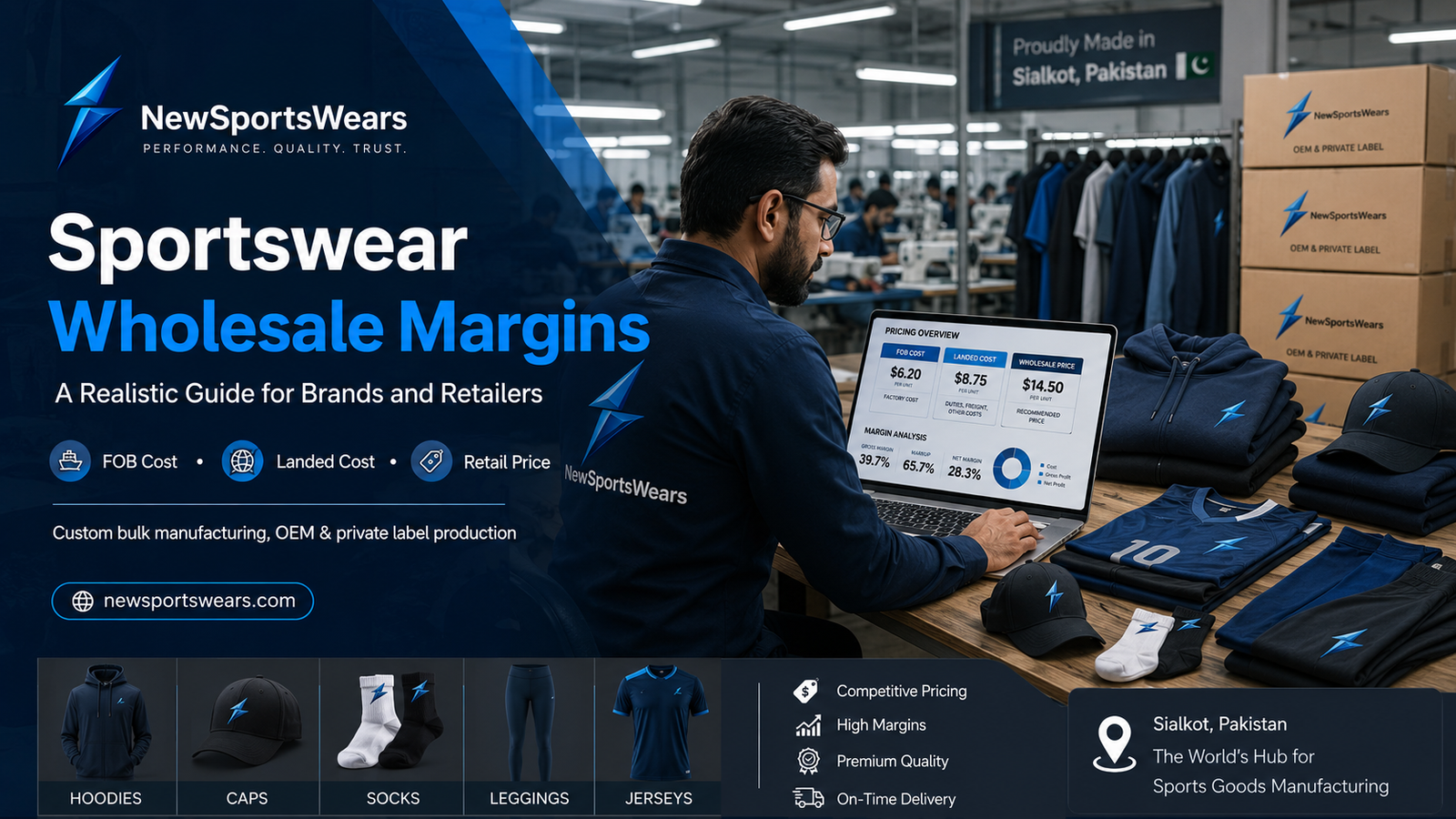
Wholesale Sportswears Margins: A Realistic Guide for Brands and Retailers
You can’t build a profitable sportswear brand without understanding margins. Yet most first-time founders dramatically underestimate true product cost — they price based on factory invoice and end up losing money on freight, duty, returns, and marketing. NewSportsWears works with hundreds of private label and wholesale clients each year, and this guide reveals the real margin math behind sustainable sportswear businesses.
The Three Layers of Wholesale Sportswears Pricing
- Manufacturing cost (FOB): What the factory invoices you per unit
- Landed cost: Manufacturing + freight + duty + tax + clearance + last-mile
- Retail / wholesale price: What you charge customers
Margins are calculated on landed cost, not factory invoice. This is the single most common mistake first-time brands make.
Standard Industry Margin Benchmarks Wholesale Sportswears
- Direct-to-consumer (D2C): 65–80% gross margin, 4–5x markup over landed cost
- Wholesale to retailers: 50–60% gross margin, 2–2.5x markup over landed cost
- Big-box retail: 35–45% gross margin to retailers, who then mark up 50%
- Amazon FBA / marketplace: 60–70% gross margin needed to absorb fees
Real Math: Hoodie Pricing Example Wholesale Sportswears
- FOB factory cost: $11 per hoodie
- Sea freight + insurance: $1.20
- Import duty (12% on apparel example): $1.46
- VAT (refundable for VAT-registered businesses): $2.74
- Customs broker + last-mile: $0.80
- Landed cost (excluding refundable VAT): ~$14.46 per hoodie
- D2C retail price (4x): $58
- Wholesale price to retailers (2.2x): $32
Note: Duty, VAT, and freight rates are illustrative — your actual numbers depend on your country, current rates, order size, and shipping method.
Hidden Costs That Eat Margin Wholesale Sportswears
- Returns and exchanges: Activewear has 15–25% return rates online
- Damaged/defective inventory: 2–5% of total order, even with QC
- Inventory storage: Warehouse fees if you sit on stock
- Marketing & customer acquisition: Often 20–35% of revenue for D2C
- Payment processing fees: 2.9% + $0.30 per transaction (Stripe/PayPal)
- Marketplace fees: 15% on Amazon, 12–15% on Etsy
- Photography, content, packaging design
Margin by Product Category Wholesale Sportswears
- Caps & hats: Highest margins — 70–80% gross at D2C
- Socks: 65–75% gross with high reorder rate
- T-shirts: 65–75% gross — competitive market
- Hoodies: 60–70% gross — premium SKUs can hit higher
- Leggings & compression: 60–70% gross
- Football/sports kits: 50–60% gross — competitive B2B market
- Jackets & technical outerwear: 55–65% gross
How Volume Affects Margin
Bigger orders unlock better unit pricing:
- 50–100 piece runs: highest unit cost, hardest to make margin work
- 500–1,000 pieces: 15–25% lower unit cost
- 2,500–5,000 pieces: 30–40% lower unit cost
- 10,000+ pieces: best pricing, only viable for established brands
Pricing Psychology Wholesale Sportswears
- Price hoodies above $45 — below this, customers question quality
- Bundle pricing (3-pack tees, kit packages) increases AOV
- Tiered pricing (basic, pro, elite) allows margin-rich premium SKUs
- Limited drops generate urgency and full-price sales
Margin-Friendly Sportswear Categories to Launch With
- Caps and beanies (low cost, high margin, high impulse buy)
- Socks (subscription-friendly, repeat purchase)
- Premium hoodies (high perceived value)
- Compression wear (premium pricing accepted)
- Leggings (high D2C margins)
Browse our sportswear catalog and request quotes at multiple quantity tiers to plan your margin strategy.
FAQs
1. What’s a healthy gross margin for a sportswear brand?
D2C: 65–80%. Wholesale: 50–60%. If you’re under these, your business will struggle to absorb marketing and overhead costs.
2. How much should I mark up over factory cost?
D2C: 4–5x landed cost. Wholesale: 2–2.5x landed cost. Always calculate from landed cost, not factory invoice.
3. Why are caps and socks higher margin than hoodies?
Materials cost less, customers expect them to cost more relative to material, and they’re impulse-purchase items rather than considered ones.
4. How do I improve margins over time?
Increase order volumes (better factory pricing), build brand premium (charge more), reduce returns through better fit guides, and develop higher-margin SKUs (premium versions of best-sellers).
5. Should I sell at multiple price points?
Yes — tiered pricing is a proven strategy. A $35 hoodie alongside a $75 premium version anchors expectations and lets margin-rich SKUs subsidize entry-level ones.
Contact NewSportsWears for custom bulk manufacturing, OEM, and private label orders.
Follow Links
Follow New Sports Wears on Instagram
Contact New Sports Wears on WhatsApp